Trade Show Booth Builder: How to Choose the Right Partner
Most exhibitors start shopping for a trade show booth builder with the wrong question. They ask "how much for a 20x20?" before they have defined what has to happen on the show floor. Ten builders will return ten numbers, all of them internally consistent and mutually incomparable, because each one is quietly making different assumptions about structure, labor, freight, venue fees and who carries the risk when something is late.
The result is predictable: the cheapest quote wins the contract, and the exhibitor pays the difference in change orders, overtime labor and a booth that arrives on site 80% finished. This guide is written from the side of the business that actually builds and installs the stand — the things that separate a builder who delivers from a broker who resells. It covers how to read a quote, what each partner model really commits you to, and the questions that expose a weak supplier before you sign.
What a trade show booth builder actually does
The title "booth builder" gets used for at least four different businesses, and the confusion costs exhibitors real money.
A design studio produces concepts and renderings. It may never touch a saw.
A fabricator or millwork shop builds from someone else's drawings. It does not read the exhibitor manual and has no one on site.
An exhibit house (design-build) owns the full chain: concept, engineering, production, logistics, venue paperwork, installation and dismantle.
A sales broker holds a supplier network and a rate card. Margin sits between you and the shop floor.
Only the third model is accountable end to end. When a stand fails on move-in day — a rigging point not approved, a crated wall missing, a floor plan that violates the aisle setback — the first two types will correctly point at the contract and say it was not theirs to solve. If your project has a hard opening date, which every trade show does, accountability matters more than hourly rates.
New Power Exhibition works as the third type. We design, fabricate and install, with our own production facility in Shenzhen and project teams that travel to the venue. Our coordination network covers 32 countries and 118 exhibition cities, which is a statement about paperwork and local crews, not about owning factories in every city. Knowing where a partner's capability actually ends is the first step to hiring well.
Three delivery models, and what each one commits you to
1. Design-build with a single contract
One party is responsible for the drawing and for what stands on the floor. This is the model that removes the classic gap between "the designer's render" and "the builder's interpretation." It also makes the quote easier to compare, because the same party carries the engineering review, the freight plan and the installation crew.
Use it when: your booth has custom structure, a fixed launch date, or a brand standard that cannot drift.
2. Build-only from your own drawings
Cheaper on paper, and appropriate when you already have stamped drawings, a reliable crew and someone internal who can own the exhibitor manual. The hidden cost is coordination: if a dimension is wrong, you are the one negotiating between designer and shop at 11 p.m. before move-in.
3. Local production with international design
Increasingly the default for multi-country programs. Design is done once, centrally; production happens in or near the venue country so you avoid ocean freight, customs exposure and repair lead times measured in weeks.
This is where cost and quality diverge most between suppliers. A builder quoting "local production" may mean a partner shop 400 km from the hall with no approved contractor status, or a warehouse relationship that lets your structure be stored, refurbished and reused across a season. Ask which one, in writing. For a deeper look at sourcing from our production base, see how to find reliable trade show booth manufacturers.
The real cost structure of a booth build
Any credible trade show booth builder cost breakdown has six lines. If a supplier returns a single number, you cannot audit it, and you cannot compare it to anyone else's.
| Cost line | What it covers | Why it varies |
|---|---|---|
| Design and engineering | Concept, 3D visuals, revisions, construction drawings, structural calculations | Complexity, number of revision rounds, whether statics are required by the venue |
| Fabrication | Structure, panels, finishes, lighting, counters, graphics production | Material grade, custom curves, finish quality, reuse requirements |
| Installation labor | Local crew, supervision, electrical connection, on-site fixes, dismantle | Union jurisdiction, night shifts, hall height, crew availability |
| Freight, handling and storage | Inbound transport, drayage, lifting, empty crates, warehousing | Distance, volumetric weight, mandatory on-site handling rules |
| Venue and compliance fees | Exhibitor badges, power, rigging, stand approval, waste removal, permits | Fixed by the organizer and hall; rarely negotiable |
| Project management | Scheduling, drawing approvals, supplier coordination, on-site problem solving | Number of countries, time zone spread, decision speed on your side |
Two rules follow from this table. First, venue fees should be shown as estimated and settled at actual cost, because electricity, rigging and waste removal are set by the organizer, not the builder. A supplier who "guarantees" them is either guessing or has padded the number. Second, design revisions have to be priced in stages. Unmetered free revisions are never free; the cost is already inside the fabrication line.
For scale: a straightforward 3x3 shell scheme sits in the low thousands of dollars; a custom 6x6 to 12x12 build with structure, lighting and meeting space typically lands in the tens of thousands; large island stands with multi-level elements, LED walls and AV run well beyond that. Anyone quoting a firm price before seeing your floor plan, exhibitor manual and venue is guessing on your behalf.
Why the lowest quote usually costs more
The gap appears after signature. Four patterns recur across projects we take over from other suppliers:
Scope that quietly excludes installation. The quote covers "booth production." Move-in labor, electrical hookup and dismantle are separate, and those are exactly the line items that inflate on site, when you have no leverage.
Labor assumption that ignores hall rules. In Las Vegas, material handling is largely union-assigned; in New York, carpet, electrical and rigging often fall to different jurisdictions. A builder who budgets "two technicians" for a hall that requires six badge-holding union hands will discover the difference on your invoice. We keep a venue labor rule directory for U.S. halls for exactly this reason.
Graphics priced before artwork exists. Print cost is driven by substrate, resolution, seam count and finish. A placeholder line becomes a change order once the real artwork arrives.
No contingency for approval cycles. Missing the stand-approval deadline in Germany or the fire marshal review in parts of the U.S. can mean redesign, not just a delay.
None of this is dishonesty. It is the natural outcome of quoting before the exhibitor manual has been read. The fix is procedural: insist the manual be reviewed before the quote is finalized.
Twelve questions that separate a builder from a broker
Ask these before signing. Vague answers are the answer.
Who reads the exhibitor manual? Name the person and the deadline.
Do you hold approved-contractor status at this venue, or do you subcontract? Which parts?
Who stamps or certifies the structural drawings if the hall requires it?
Is installation labor in the price, and at what crew size?
What is the assumed power load, and who orders it?
How many design revision rounds are included, and what does round four cost?
Where is the booth made, and can we inspect it before it ships?
What is your on-site escalation path when a wall arrives damaged? Name, phone, authority to spend.
How is drayage handled, and is material handling mandatory at this hall?
What happens to the stand after the show — stored, refurbished, resold, scrapped?
Show me two projects of similar size and complexity in this venue or region, with the client's contact for reference.
What is excluded from this quote? Get it in writing.
A real builder answers 1, 3, 7 and 8 without hesitating, because those are the daily mechanics of the job. A broker stalls on exactly those four.
Work backwards from move-in, not forwards from today
Exhibitors lose more projects to the calendar than to the design. A workable sequence for a custom international build:
| When | What must be locked |
|---|---|
| T-16 to T-14 weeks | Booth objectives, floor plan selected, budget band agreed, builder appointed |
| T-12 weeks | Concept approved; exhibitor manual downloaded and read; venue questions submitted |
| T-10 weeks | Final design and construction drawings; material and finish sign-off |
| T-8 to T-6 weeks | Fabrication complete; pre-build inspection or photo sign-off; graphics approved |
| T-6 to T-4 weeks | Freight booked; customs documents prepared; stand approval submitted by venue deadline |
| T-3 weeks | Power, rigging, furniture and AV orders placed (these deadlines are hard) |
| T-1 week | Crew confirmed, badges and passes issued, on-site schedule shared with your team |
| Move-in | Installation, electrical hookup, cleaning, final walkthrough before opening |
Two thirds of the failures we are called in to fix trace back to weeks T-12 to T-10, where drawings were approved verbally and never reconciled against the manual. If you are within 30 days of the show, expect expedited production and freight to add 10–20% — not because suppliers are opportunistic, but because air freight, overtime in the shop and premium crew slots all cost more. For the budget side of this timeline, see what it costs to import a booth from China.
Venue rules are where international projects break
Design intent survives translation; compliance does not. The three recurring failure zones:
Germany and much of continental Europe. Stand approval is a formal submission with structural documentation, and the hall enforces height, sightline and fire regulations strictly. Missing the deadline is not a fine, it is a refusal to build. Our Europe project archive shows the submission sequence in practice.
United States. Labor jurisdiction is local and specific. Some halls require union crews for material handling, electrical and rigging; others allow exhibitor-appointed contractors with conditions. Budget and schedule both depend on getting this right before fabrication.
Middle East and parts of Asia. Customs and licensing consume the calendar. A stand that clears in three days in one market can take ten in another, and free-zone rules change the paperwork. Our global case archive documents the licensing and logistics chain we actually run.
The practical lesson: a builder's value is concentrated in the 20% of work that happens before anything is built. Design quality is visible in a portfolio — witness how visual attention actually works on a show floor. Compliance competence only shows up when it is missing.
Where local production changes the economics
For multi-show programs, the biggest savings are not in the build — they are in what happens between shows. Options worth pricing explicitly:
Storage and refurbishment near the venue, so the same structure serves three or four events instead of one.
Modular cores with swappable graphics, which lets a 6x6 become a 6x9 without new millwork. See our stand design and build services.
Local fabrication of the second unit, using the same drawings, to avoid shipping a duplicate set across an ocean.
Reuse planning at design stage — specifying demountable connections instead of glued and stapled assemblies.
A builder who only quotes one show at a time has no incentive to raise these. Ask what a three-show program would look like on the same asset.
Red flags worth walking away from
A firm total price before the exhibitor manual has been read.
No named on-site supervisor, only a "local partner."
Refusal to share construction drawings before payment in full.
Venue fees presented as fixed and fully included, with no estimate-versus-actual language.
No reference from a project of comparable size in the same region.
Answers about labor that treat all countries as identical.
What to send us for a real quote
We quote from documents, not from adjectives. To return a number that survives contact with the venue, send:
Floor plan with dimensions and aisle orientation, including the number of open sides.
The exhibitor manual or technical regulations for that hall, if you have them.
Your stand design, or a reference image and a short brief if design is still open.
Show name, venue, city and dates, plus the published move-in window.
Budget band and target reuse — one show, or a season.
Any brand guidelines covering color, logo clear space and mandatory elements.
With those six items we can usually return a structured quote within two to three working days, broken into the six cost lines above so you can compare it against any other supplier on equal terms. If you are still choosing a stand size, start with our services and the completed project archive.
Send your floor plan, exhibitor manual or design file to our team → Contact us and tell us the show. We will tell you what is realistic for your date before we talk about design.
FAQ
What does a trade show booth builder do that a design agency does not?
A builder owns production, logistics and installation, and is accountable on site. A design agency delivers concepts and renderings; if the render cannot be built within the venue's rules or the budget, that problem surfaces later and belongs to whoever signed the construction contract.
How much does a trade show booth builder cost?
It depends on four variables: stand size, design complexity, venue labor rules and whether freight and installation are included. A shell scheme is in the low thousands; a custom 6x6 to 12x12 build typically reaches the tens of thousands; large island stands with structure and AV go higher. Any firm number given before the floor plan and exhibitor manual are reviewed should be treated as an estimate.
Can one builder handle a show in another country?
Yes, if they have real coordination capability there — approved-contractor status or vetted local crews, plus experience with that country's customs and venue approval process. Ask which parts are done by their own team and which are subcontracted, and ask for a reference from that specific region.
Is it cheaper to build locally or ship the booth?
Shipping makes sense for reusable assets and for structures with high design value. Local production usually wins for one-off builds, tight timelines and anything requiring fast on-site repair. For multi-country programs, the answer is often a hybrid: one central design, local fabrication of the repeatable elements.
Who is responsible for venue paperwork and stand approval?
The builder should prepare and submit it, because the submission is technical — drawings, structural details, materials. The exhibitor remains the contractual party with the organizer, so review the submission and keep the deadline visible on your own calendar.
How far in advance should I appoint a booth builder?
Fourteen to sixteen weeks for a custom international build. Ten to twelve weeks is workable with fast decisions. Under 30 days is possible but expensive: expect expedited production, premium freight and limited crew options.
What happens to my booth after the show?
Ask before you build. Options are storage and refurbishment for the next event, resale, or disposal. Structures designed for reuse — demountable connections, modular panels, replaceable graphics — cut the cost of every subsequent show.
Recent News
-
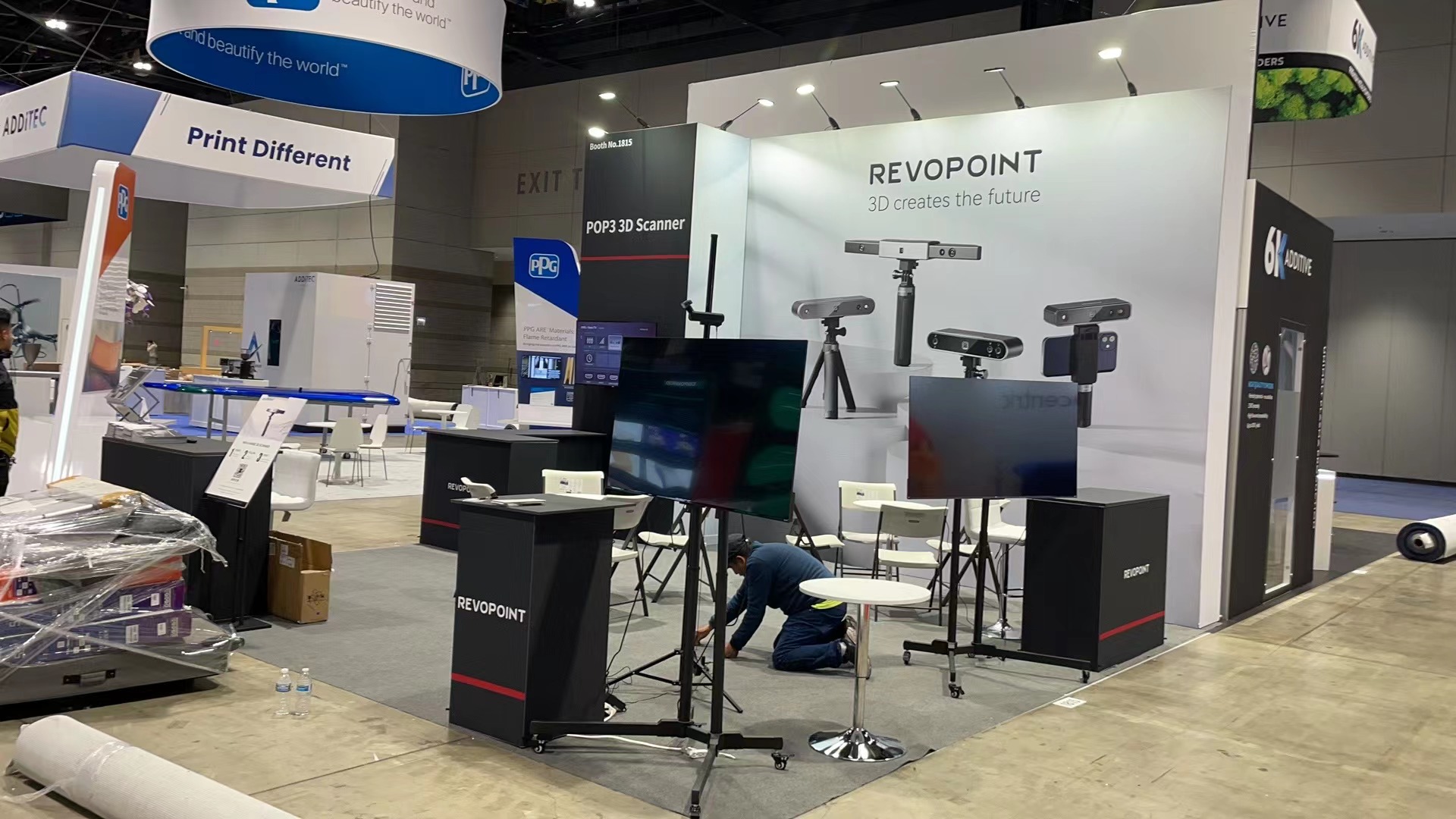 RAPID and TCT America Stand De Nov 14,2023
-
 RAPID and TCT America Stand De Nov 14,2023
-
 SupplySide Show America Stand Nov 13,2023
-
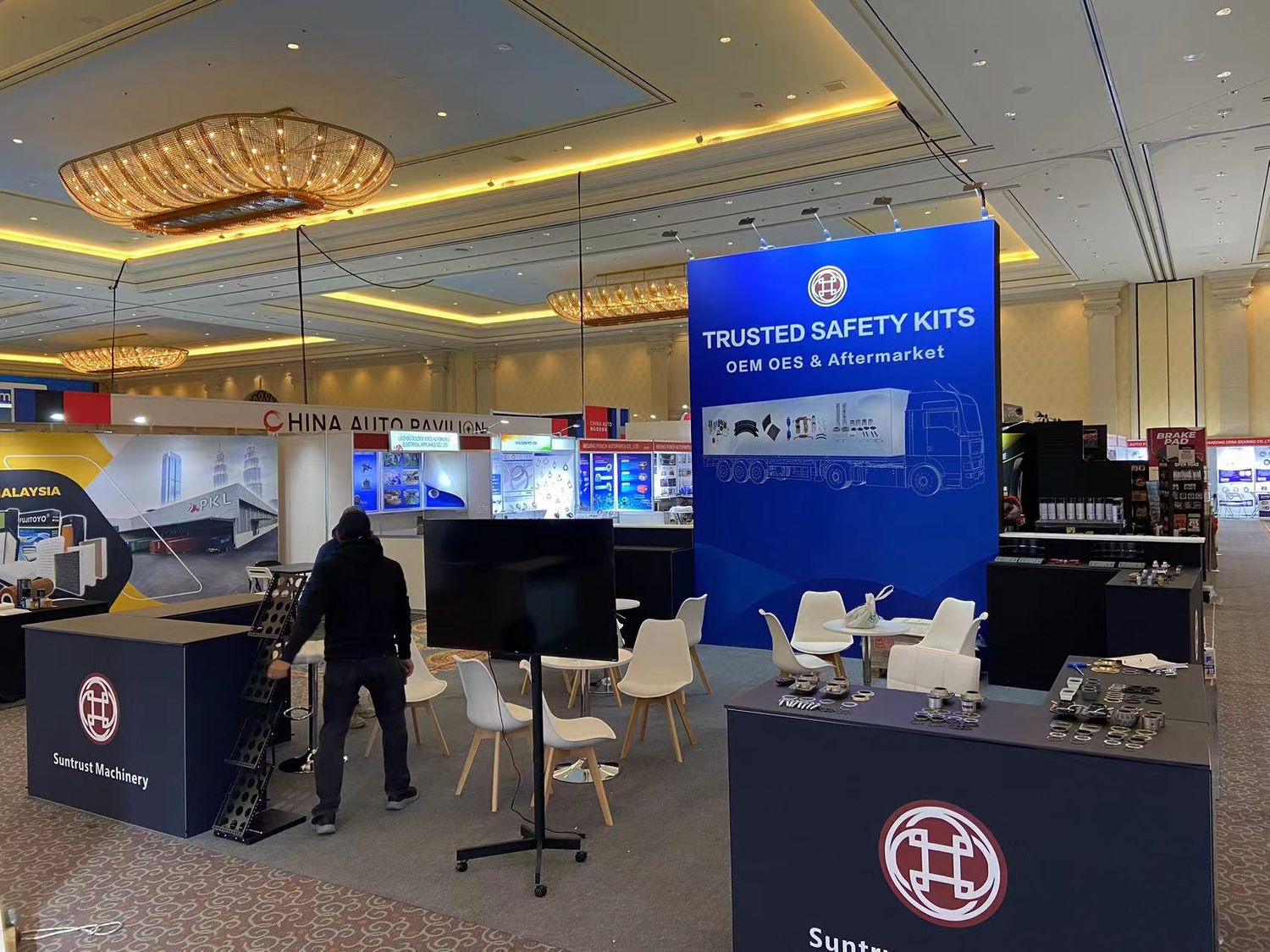 APPEX America Stand Design an Nov 01,2023
-
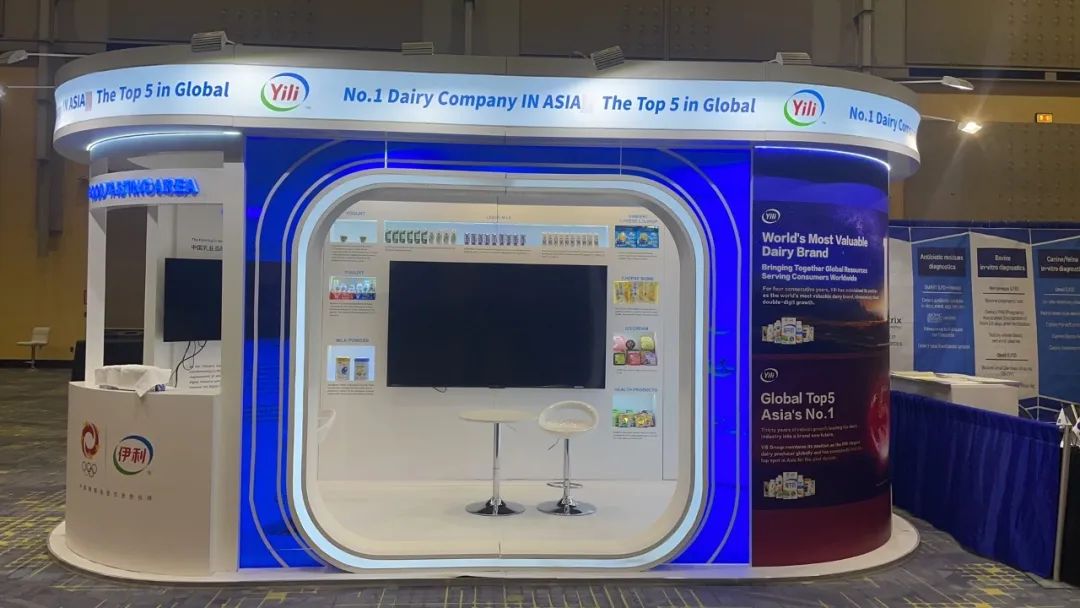 2023idf Stand Design and Build Oct 31,2023