How to Cut the Real Cost of Your 10x10 Booth (Without Killing Results)
You book a small space. Just a 10x10 tradeshow booth.
It sounds cheap.
Then the quotes land in your inbox and suddenly you’re staring at a five‑figure number for 100 square feet and a couple of walls.
I hear the same worries over and over:
- “Why is this tiny booth display costing more than our website redesign?”
- “What can I cut without making us look broke or amateur?”
- “If I push back on the stand builder, what actually moves the needle?”
If that’s where your head is, you’re not overreacting. For a basic 10x10 tradeshow booth, many teams end up spending three to five times the space fee once you add booth design, booth setup, shipping, services, and staff.
The good news: most of that cost is not fixed. You can’t negotiate gravity, but you can absolutely design around it.
Below is what I’ve seen work, across different industries, when people want to cut total cost by 20–40% without tanking performance.
The Business Problem: High Cost, Low Predictability
On paper, a 10x10 is simple.
In practice, it’s a messy mix of:
- venue rules
- union labour
- last‑minute changes
- confused internal stakeholders
- and vendors who benefit when you buy more stuff
Finance wants a clear number. Marketing wants impact. Sales wants traffic and meetings. And the 10x10 tradeshow booth is caught in the middle.
Most leadership teams ask some version of:
“If we’re going to spend this much, can we at least spend it intelligently?”
That’s the real question: not “How cheap can we go?” but “Where does money actually earn its keep?”
Short Analysis: Where the Money Really Goes in a 10x10
When you break down a typical 10x10 tradeshow booth budget, the same buckets show up:
Floor space
- Often $2,000–$6,000 for a standard 10x10, depending on the show and industry.
- Rule of thumb some organisers quote: all‑in cost ends up 3–5x the space fee.
Booth design and structure
- Purchase or rental of the frame, walls, counters, and basic furniture.
- Maybe $3,000–$15,000+ depending on whether it’s custom, modular, or off‑the‑shelf.
Graphics and messaging
- Printed panels, fabric graphics, lightboxes, hanging signs.
- Costs spike when designs change every show or when you need rush production.
Booth setup and dismantle labour
- Union crews, overtime, minimum call times.
- A “simple” booth setup that runs long can quietly add $1,000–$3,000.
Freight and material handling (drayage)
- Shipping the booth in, plus the venue’s charge to move it from the dock to your stand.
- Heavy, bulky crates are cost multipliers.
Show services
- Electric, internet, rigging, cleaning, lead capture devices.
- Late orders and on‑site changes get hit with premiums.
Travel and staffing
- Flights, hotels, per diems, time away from other work.
- Usually larger than people expect, especially on international shows.
When exhibitors say, “This show just got out of hand,” it’s rarely one giant mistake. It’s small overspends across every line item.
The trick is to design your 10x10 tradeshow booth so half of those lines drop or shrink automatically.
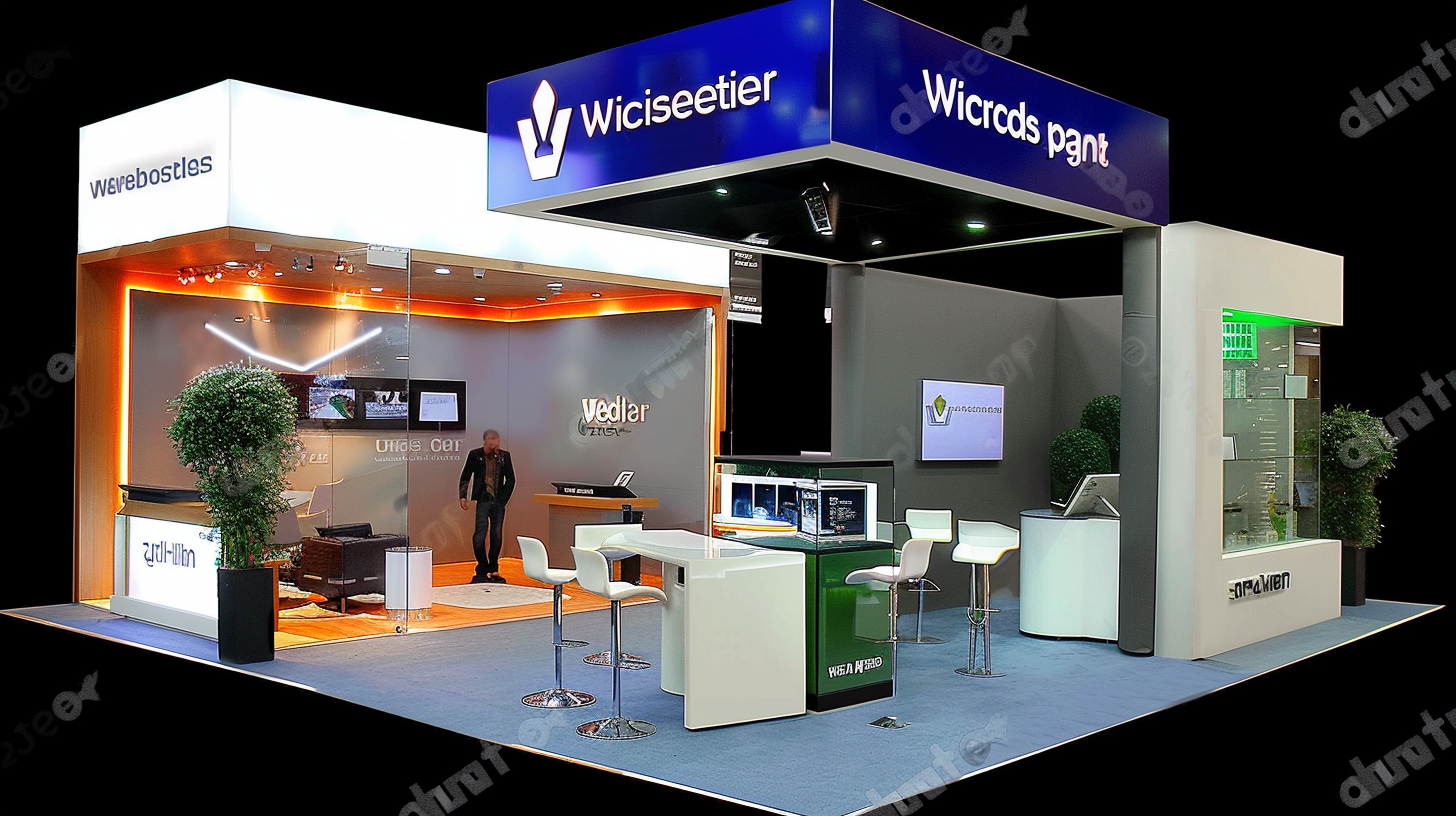
Suggestions: The Levers That Actually Reduce Total Cost
1. Strip Your Booth Design Back to the Business Goal
Most 10x10s are trying to do too much in too little space.
Your stand is not a museum. It’s a filter. Its job is to:
- attract the right people
- repel the wrong people
- start the right conversations
Once you see it that way, a lot of expensive “nice to haves” in your booth design fall away.
Practical moves:
One clear promise, one clear next step.
Big headline, one offer, one main CTA. That’s it. Less wall space covered in tiny copy means fewer and cheaper graphics.Go vertical but stay light.
Fabric backwalls, tension frames, and modular systems weigh less and pack smaller than custom wood structures, which cuts freight and drayage.Design your booth display to be re-used.
Use brand‑level messaging that still works next season. Then swap in small, interchangeable panels for campaign‑specific content. That way you’re not reprinting full walls for every show.
If you’re honest, a lot of the “clever” parts of booth design exist to impress internal stakeholders, not buyers. Cut those first.
2. Engineer the Booth Setup to Save Labour
Everyone talks about design. Not enough people talk about assembly.
A 10x10 tradeshow booth that takes two hours to install is very different, financially, from one that takes six. Same floor space, very different total cost.
Design for fast booth setup:
Push for tool‑less systems.
Aluminium frames that click together, magnetic panels, integrated lighting. Anything that means fewer tools and fewer crew.Pre‑wire and pre‑label everything.
Power, media players, demo gear. If your team or the contractor spends 90 minutes tracing cables, that’s pure waste.Avoid anything that needs rigging.
Overhead signs, truss systems, and complex structures add cost fast. In a 10x10, they rarely pay off.
If the stand builder’s layout looks complicated on paper, assume it will be even worse for booth setup on the show floor.
3. Attack Weight and Volume: Freight Is a Silent Profit Killer
From what I’ve seen, this is where a lot of hidden cost lives.
Two booths can look similar from the aisle and have completely different freight bills, just because of material choices and packing.
To cut shipping and handling:
Choose lighter materials.
Fabric graphics instead of glass or thick acrylic, hollow aluminium instead of heavy wood. Same visual impact, lower weight.Minimise crate count.
Design your 10x10 tradeshow booth so it fits into fewer, standard‑size cases or crates. Many venues price drayage by crate and weight.Use portable, case‑to‑counter solutions where possible.
Some counters and sections of booth display convert from the cases themselves, which reduces both volume and extra furniture.
Others suggest working with local partners and renting some items in‑city (like stools or simple counters) to avoid shipping them. It’s worth comparing numbers instead of assuming one way is always cheaper.
4. Stop Paying for Things That Don’t Change Outcomes
This sounds obvious, but at this show and the next, teams still pay for a long list of low‑value extras because “we’ve always done it” or because someone senior likes them.
If you want to reduce total cost, be ruthless:
Printed brochures and heavy swag.
Most of it ends up in hotel bins. Move to digital follow‑ups and one small premium item for qualified prospects only.Extra screens and gadgets.
If one screen does the job, don’t pay to ship and power three. A simple looping demo often beats a wall of motion no one watches.Over‑furnished spaces.
A 10x10 is not a lounge. One meeting table or a small counter plus a couple of stools is usually enough. Less furniture = more open, welcoming booth display and less freight.
Every time you’re about to approve a cost, ask:
Does this increase traffic, lead quality, or meetings?
If you can’t make a straight‑face case, cut it.
5. Design for Multiple Shows, Not One Big Moment
A lot of overspending comes from treating each event as a one‑off.
If there’s even a 50/50 chance you’ll do more than one show, design and buy like you definitely will.
Think in systems:
Create a modular 10x10 tradeshow booth “kit.”
Same core structure, same hero graphic, with a small set of swappable elements for different verticals or campaigns.Standardise sizes.
Keep graphics in a few repeatable dimensions so reprints are cheaper and faster. Printers often give better rates on standard cuts.Store smart.
Proper cases, clear labelling, and simple instructions extend the life of your booth design. Damage and lost parts are avoidable costs.
The more repeatable your booth setup is, the less you rely on expensive custom work every time.
6. Use Rentals Strategically, Not Emotionally
Teams sometimes treat rental vs. purchase as a philosophical question. It isn’t. It’s just maths.
- If you’re testing a new market or product: rent most of the structure and own the graphics.
- If you know you’ll run the same campaign for 12–24 months: own the core structure and maybe rent add‑ons.
Rentals make sense for bulky, generic pieces: counters, basic walls, standard furniture. Owning makes sense where you need precise booth design that reflects your brand.
The key is to compare the total two‑year cost of both options, including:
- rental fees
- storage
- repair
- freight
- booth setup labour every time
7. Beat the Show Services Game by Reading the Boring Stuff
Nobody enjoys the exhibitor manual. But that’s where a surprising amount of savings live.
If you want to reduce total cost:
Hit early‑bird deadlines for electric, internet, and furniture.
Late orders can be 20–40% higher. Same service, just punished for delay.Know union rules.
In some venues you’re allowed to handle your own booth setup if the 10x10 tradeshow booth is “portable” and you use your own team. In others, you’ll pay extra if your staff moves a crate. Know before you plan.Avoid on‑site changes.
A last‑minute power drop for a missed socket will always be painful. Design your booth display around the power and internet you pre‑order.
This isn’t glamorous work, but it separates the teams that “hope for the best” from the ones that consistently run lean.
8. Where You Should Not Cut Corners
Some cost cuts backfire. A few areas almost always deserve investment:
Lighting.
A well‑lit 10x10 tradeshow booth looks bigger, cleaner, and more premium. Basic LED spots are cheap compared with the impact.Flooring.
Decent flooring makes your team less tired and your space more inviting. It’s also a subtle brand signal.Staff quality and training.
A strong team in a simple booth will outperform a weak team in a beautiful one. Your people make the sale, not the panels.
Think of it like this: hardware gets attention; humans close deals. Don’t starve the second to fund the first.
Quick Checklist: Cutting 20–40% from Your Next 10x10
If you want something practical to work through, this is what I’d use:
Clarify the goal
- Leads? Meetings? Demos booked? Decide before touching booth design.
Audit the last show’s spend
- Mark each line item: must have, nice to have, waste. Cut the last category completely.
Redesign for speed and lightness
- Tool‑less, modular structure
- Fabric graphics
- Minimal furniture
Standardise your booth display kit
- Re‑usable 10x10 tradeshow booth frame
- Swap‑out graphics
- Clear assembly instructions
Lock services early
- Order electric and internet before early‑bird cut‑offs
- Confirm union rules and what “self‑install” really means
Plan staff around peak hours
- Enough coverage when traffic is high, no dead weight on slow days
If you work through that list honestly, you usually don’t need heroics. Just better decisions, earlier in the process.
Reference List
- Exhibitor Media Group. “EXHIBITOR Magazine 2024 Economic Outlook and Budgeting Survey.”
- CEIR (Centre for Exhibition Industry Research). “How Exhibitors Allocate Their Trade Show Budgets,” 2023.
- EDPA (Experiential Designers & Producers Association). “Portable/Modular/Custom: Cost and Usage Benchmarks,” 2022.
- Trade Show News Network. “Exhibitor Cost Control Strategies in a Post‑Pandemic Market,” 2023.
Recent News
-
 RAPID and TCT America Stand De Nov 14,2023
 -
 RAPID and TCT America Stand De Nov 14,2023
 -
 SupplySide Show America Stand Nov 13,2023
 -
 APPEX America Stand Design an Nov 01,2023
 -
 2023idf Stand Design and Build Oct 31,2023